
Brinjal (Eggplant) Grow Guide (From Seed to Harvest)
Grow strong brinjal plants with better yield using this step-by-step guide: soil preparation, seed sowing, transplanting, sunlight, watering, pest control, flowering, and harvesting.
Soil Preparation
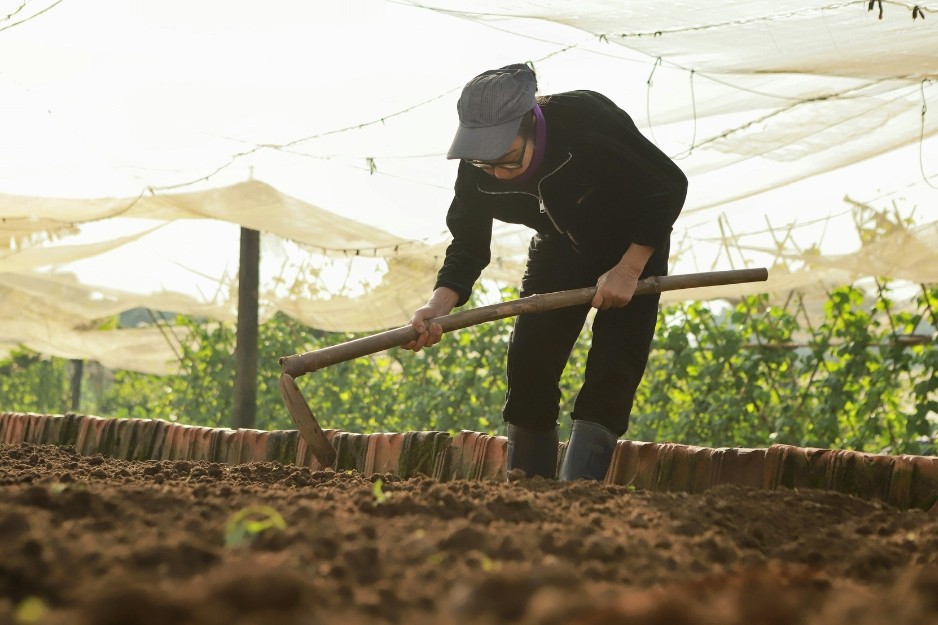
Brinjal is a heavy feeder, so compost-rich, well-draining soil is essential for strong growth and bigger fruits.
Recommended Soil Mix
- Base: garden soil + coco peat or sand for airflow
- Nutrition: compost or vermicompost (brinjal needs steady feeding)
- Optional booster: small amount of organic manure or bone meal
Seed Sowing Guide
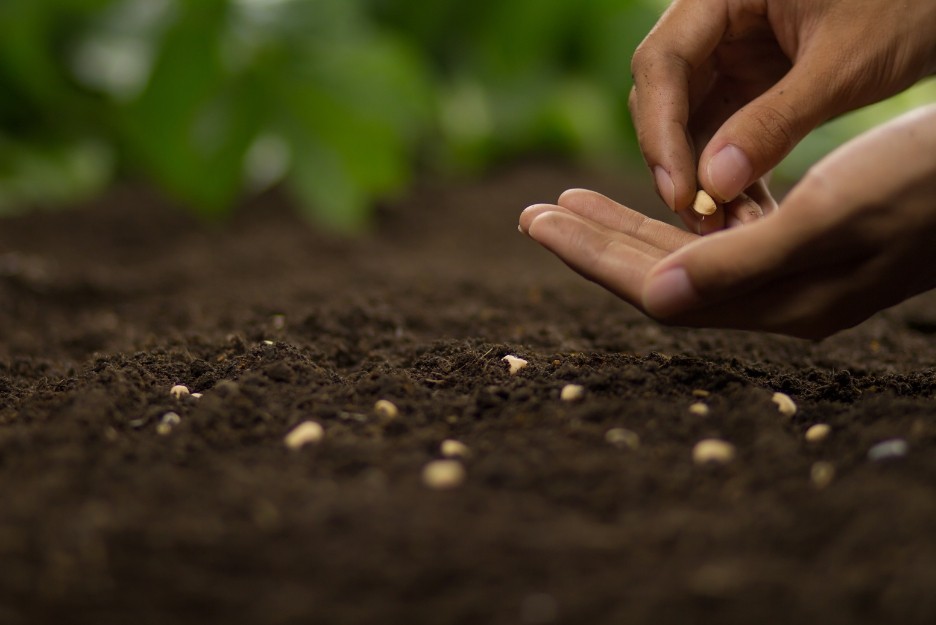
Start brinjal seeds in a tray or small pots for strong seedlings and better germination control.
Step-by-Step
- Sow seeds 0.5–1 cm deep in moist seed-starting mix.
- Keep soil moist (never waterlogged).
- Maintain warmth (22–32°C) for faster germination.
- Germination typically takes 7–15 days.
Transplanting Seedlings
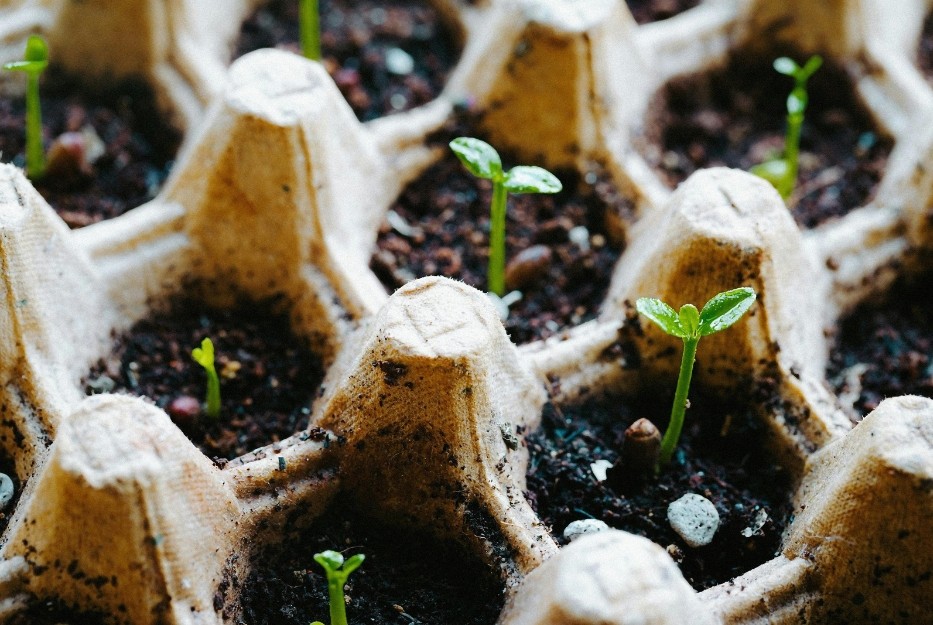
Transplant seedlings at the right stage to reduce shock and help the plant establish quickly.
When to Transplant
- After 4–6 weeks OR when seedlings have 4–6 true leaves.
- Water seedlings before transplanting to protect roots.
- Plant at the same depth as in the tray.
Spacing Guide
- Garden bed: 45–60 cm between plants
- Pots: 1 plant per 12–16 inch pot
Sunlight Requirements
Brinjal needs full sun to flower properly and produce larger fruits.
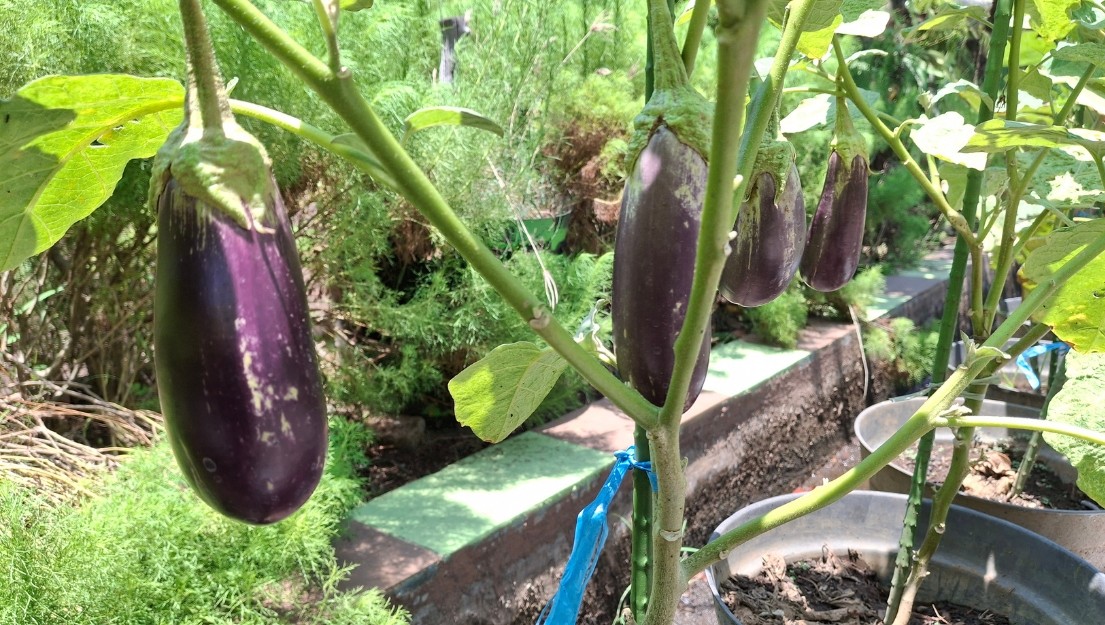
- Ideal: 6–8 hours of direct sunlight daily
- Low sun: fewer flowers and smaller fruits
- Hot days: light afternoon shade can reduce heat stress
Watering Schedule
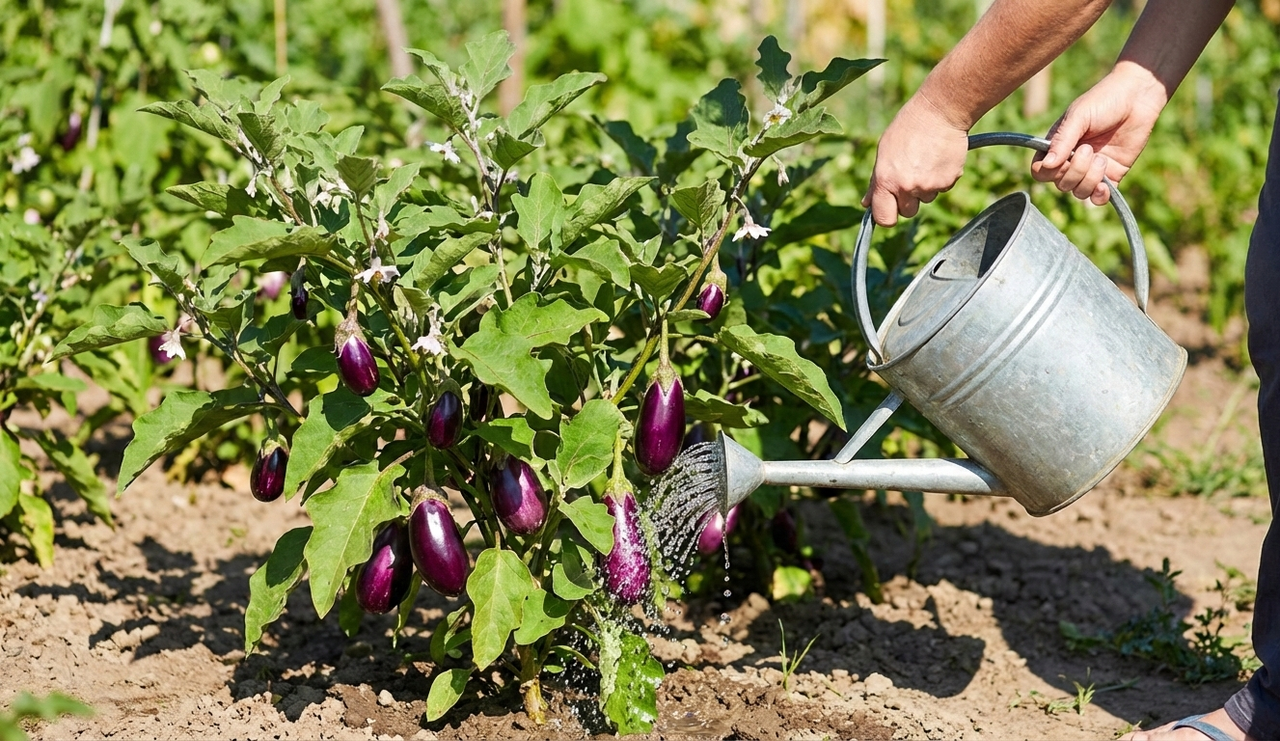
Brinjal needs steady moisture—especially during flowering and fruiting. Avoid extremes (too dry or too wet).
Best Routine
- Water in the early morning for best absorption.
- Water when top 2–3 cm soil feels dry.
- Keep soil evenly moist during flowering and fruiting.
Overwatering Signs
- Yellow leaves
- Wilting even when soil is wet
- Soft stem near soil line
Pruning & Support
Light pruning improves airflow and plant health, while support prevents branches from breaking under heavy fruits.
Why Pruning Helps
- Improves air circulation and reduces fungal problems
- Helps sunlight reach inner branches for better flowering
- Makes pest inspection easier
- Directs energy toward fruit development
How to Prune Brinjal Plants
- Remove weak, damaged, or diseased branches early
- Trim lower leaves touching the soil to prevent infection
- Remove overcrowded shoots for better airflow
- Avoid heavy pruning during active flowering
Support & Staking
- Use bamboo sticks or wooden stakes for tall varieties
- Tie the stem loosely using soft rope/cloth (don’t tighten)
- Support prevents bending and breakage from heavy fruits
- Highly recommended for pot-grown brinjal plants
Pest & Disease Control
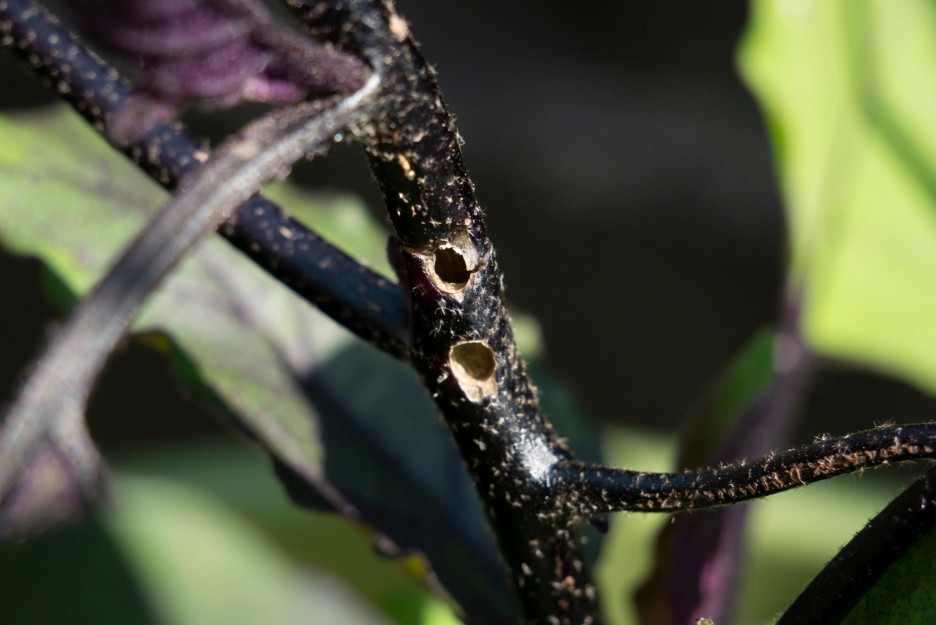
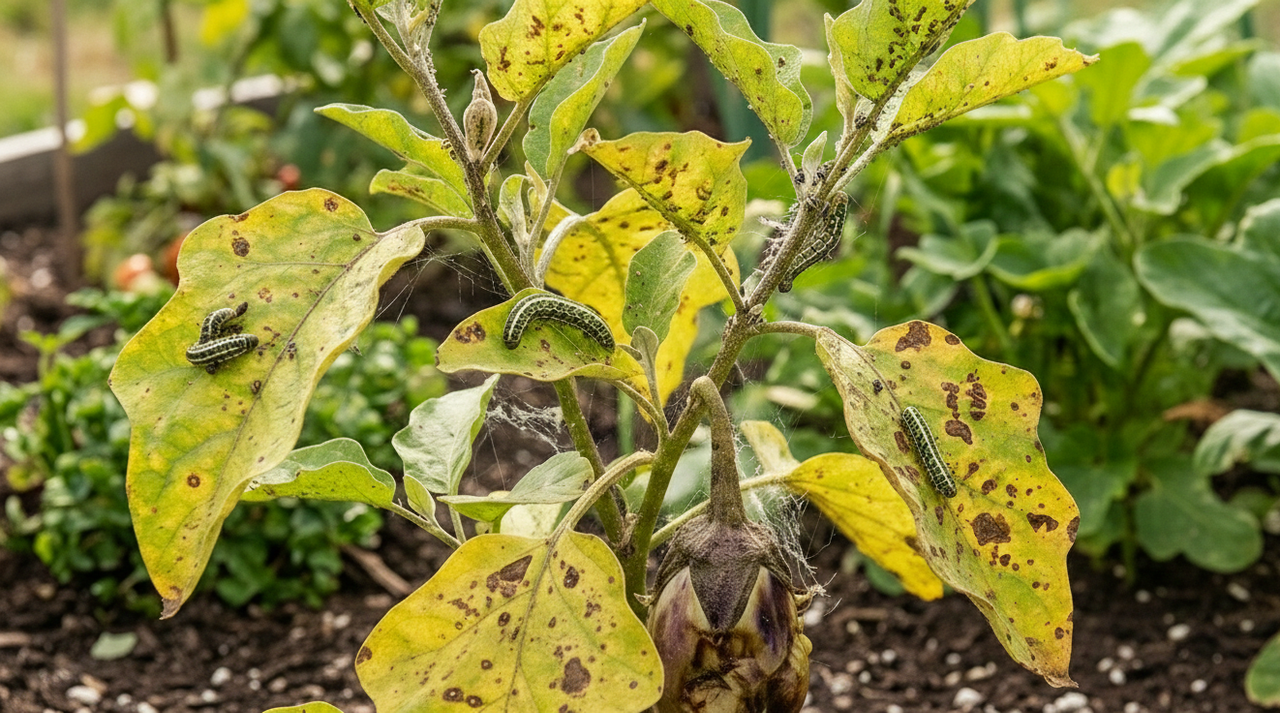
Brinjal often attracts pests. Weekly checking and early action protect your fruits and overall yield.
Common Brinjal Pests
- Fruit and shoot borer
- Aphids
- Whiteflies
- Spider mites
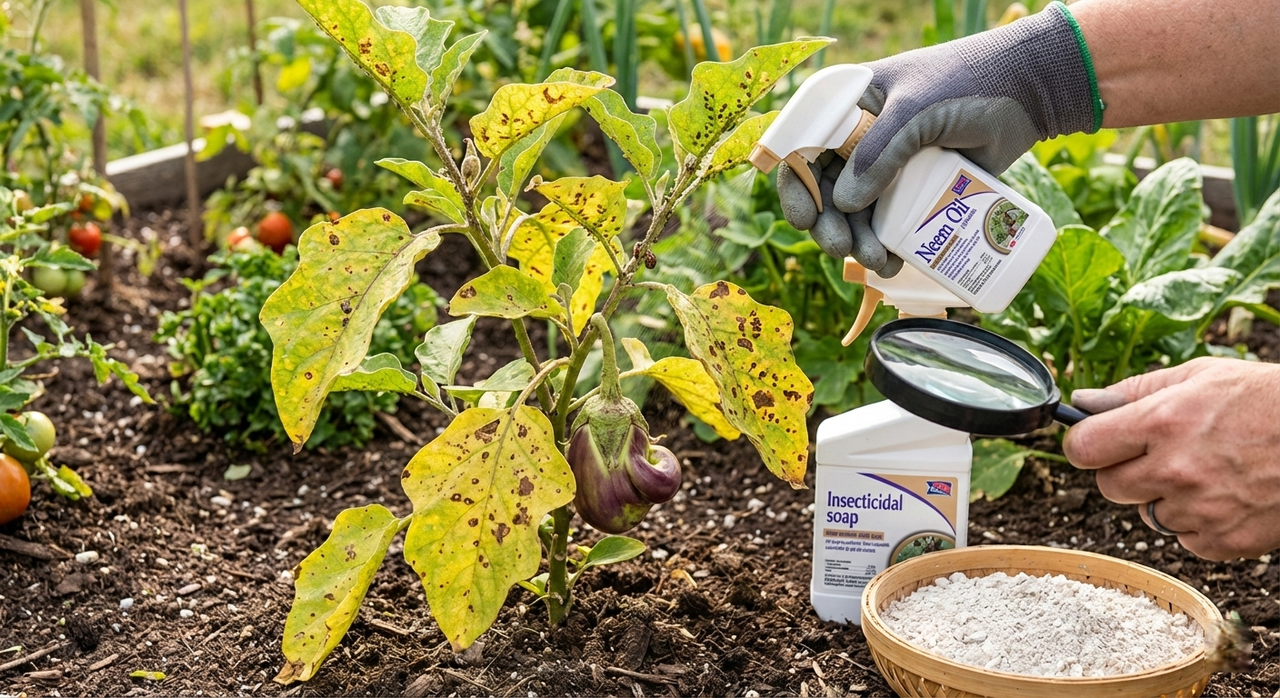
Organic & Safe Treatments
- Neem oil spray: weekly or after rain
- Remove infected shoots/fruits: destroy away from the garden
- Yellow sticky traps: reduce whiteflies
- Improve airflow: spacing + pruning helps prevent fungus
Flowering & Fruiting
Brinjal usually begins flowering after strong vegetative growth. Sunlight + balanced feeding improve fruit set.
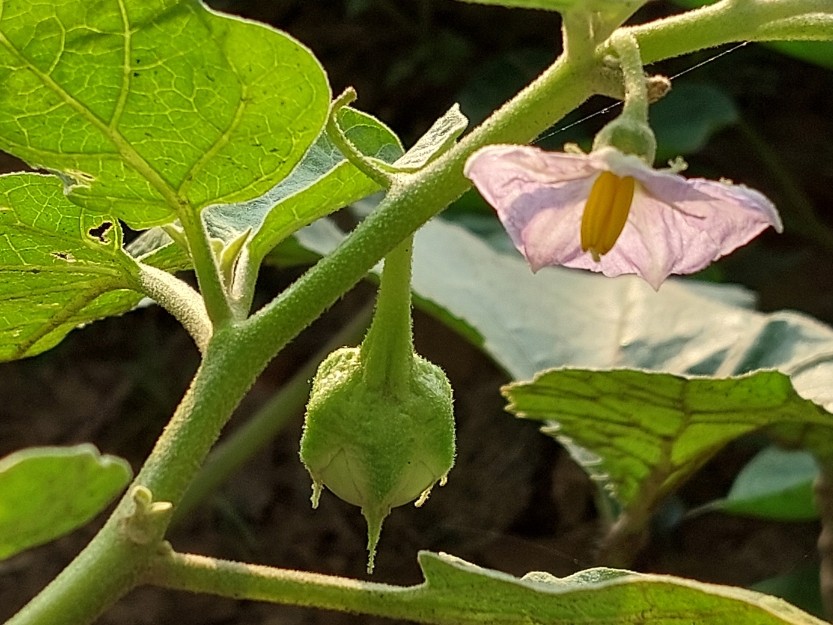
- Flowers often appear 45–65 days after transplant (variety dependent).
- Ensure 6–8 hours of sunlight for better flowering.
- Use balanced feeding; add potassium-rich feed during fruiting.
- In covered spaces, gentle shaking can help pollination.
Harvesting Brinjal
Harvest at the right maturity for better taste and continuous production. Pick when fruits are glossy and firm.
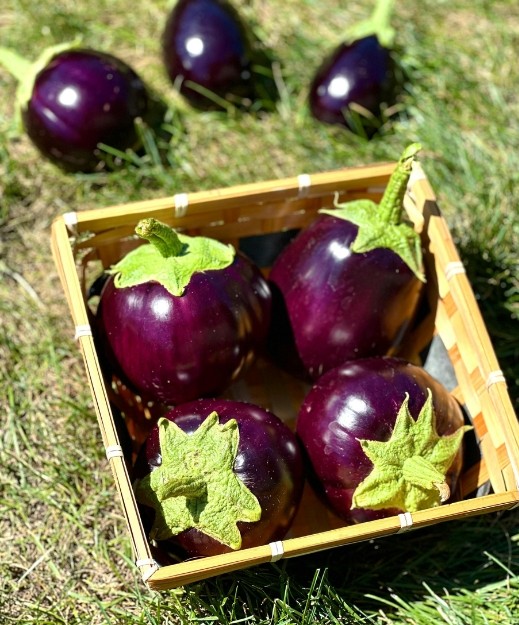
When to Harvest
- Harvest when fruits are glossy and firm.
- If fruits become dull and seeds harden, quality reduces.
- Regular harvesting encourages more flowering and fruiting.
How to Harvest
- Use scissors/knife and cut with stem attached.
- Handle gently to avoid bruising.
Brinjal Growing FAQ
How long does brinjal take to grow from seed?
Brinjal usually takes about 90–140 days from seed to harvest depending on variety, sunlight, and temperature.
Why are my brinjal flowers falling off?
Flower drop can happen due to heat stress, low sunlight, overwatering, or nutrient imbalance. Ensure full sun and balanced feeding (including potassium during flowering).
Can I grow brinjal in a pot?
Yes. Use a 12–16 inch pot, compost-rich soil, full sun, and regular feeding. Stake the plant if fruits become heavy.