
Onion Grow Guide (From Seed to Harvest)
Grow healthy onions with better bulb size and storage quality using this step-by-step guide: soil preparation, seed sowing, spacing, sunlight, watering, fertilization, pruning & care, pest control, bulb formation, and harvesting.
Soil Preparation
Loose, well-draining soil helps onion bulbs expand properly and reduces rot risk.
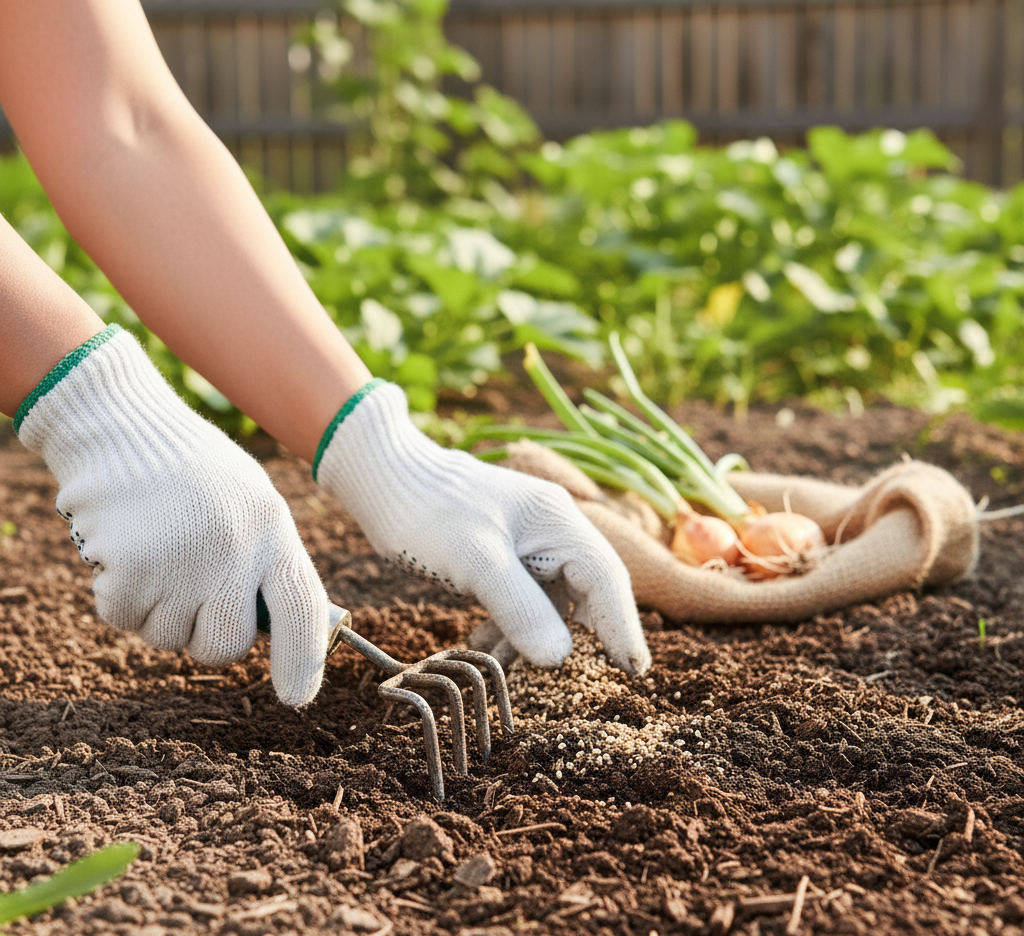
Recommended Soil Mix
- Base: light garden soil + sand/coco peat for drainage
- Nutrition: compost/vermicompost for steady growth
- pH: 6.0–6.8 for best bulb development
Seed Sowing Guide
Onions can be grown from seed or seedlings. Seedling method is popular for uniform growth.
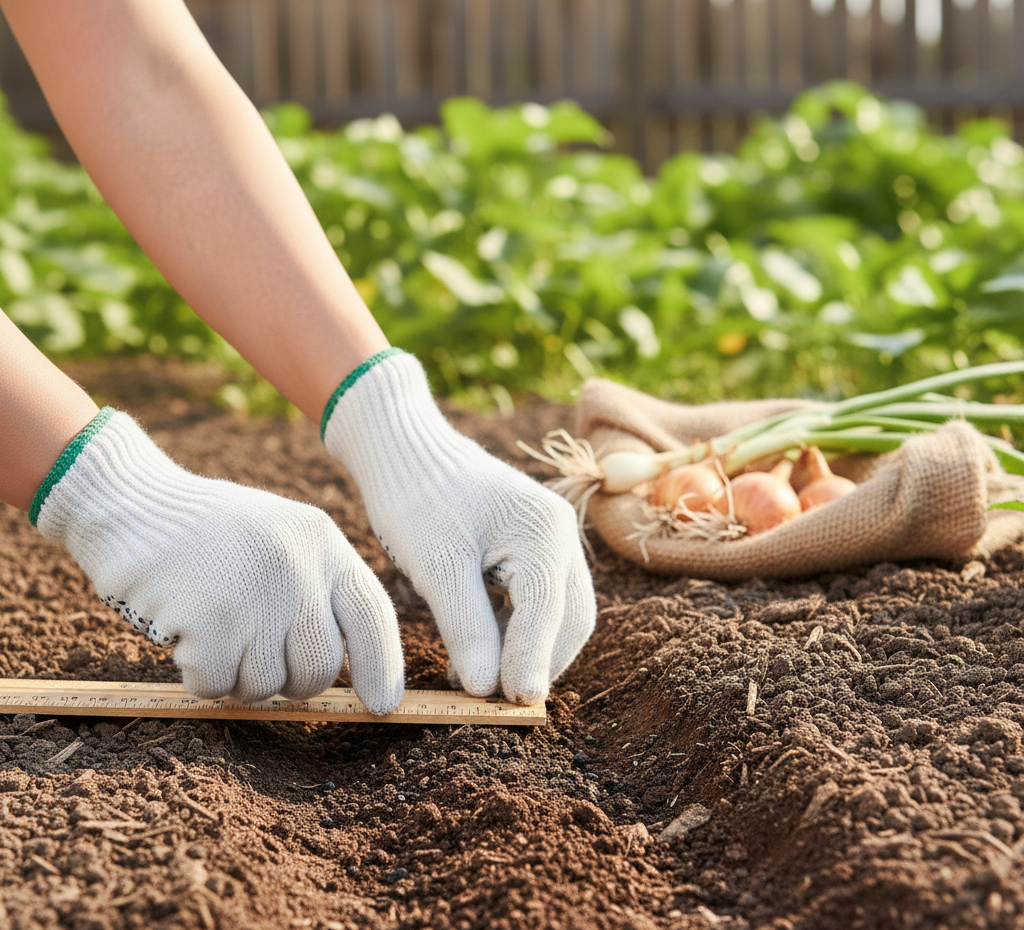
Seed Method
- Sow seeds 1–1.5 cm deep.
- Keep soil lightly moist (not soggy).
- Germination usually takes 7–12 days.
Seedling Method (Optional)
- Start in trays and transplant after 6–8 weeks.
- Transplant when seedlings are 10–15 cm tall.
Spacing & Thinning
Proper spacing is critical for bigger bulbs and better airflow.
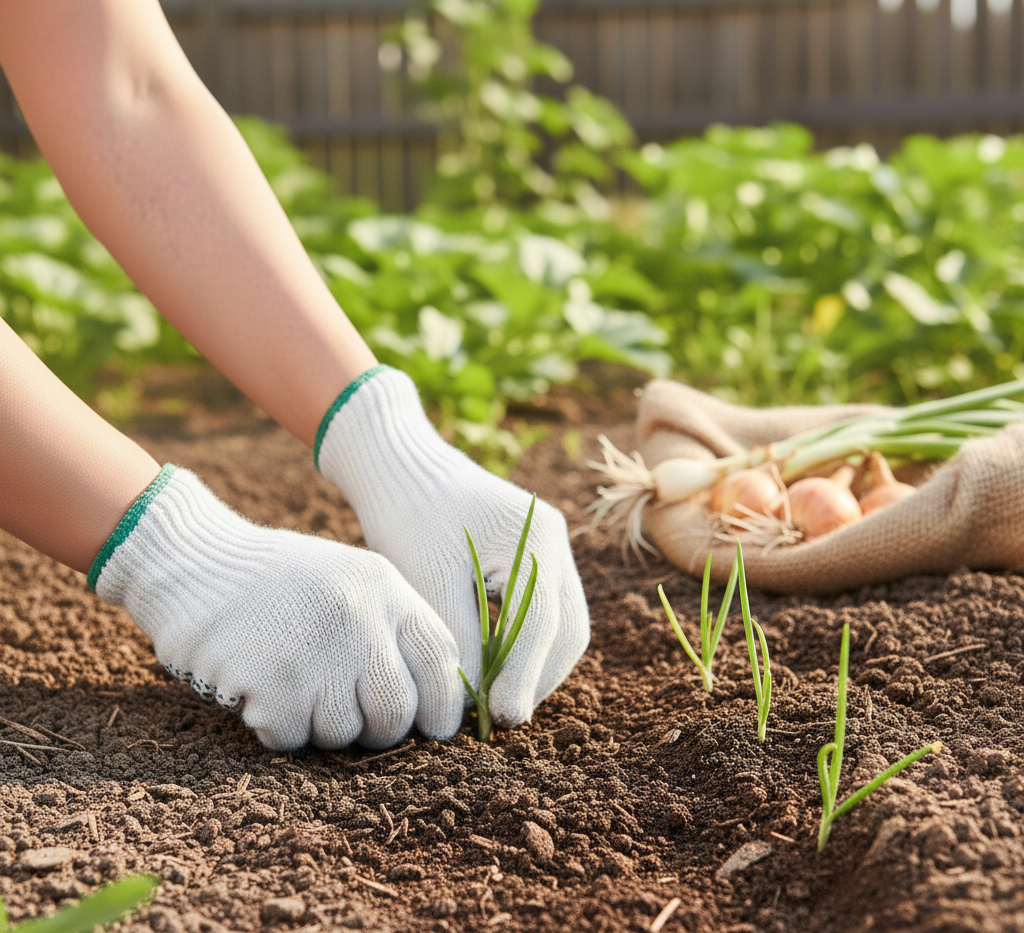
- Plant spacing: 10–15 cm
- Row spacing: 25–30 cm
- Tip: Crowding leads to small bulbs—thin early if needed.
Sunlight Requirements
Full sun supports strong leaf growth and healthy bulb formation.
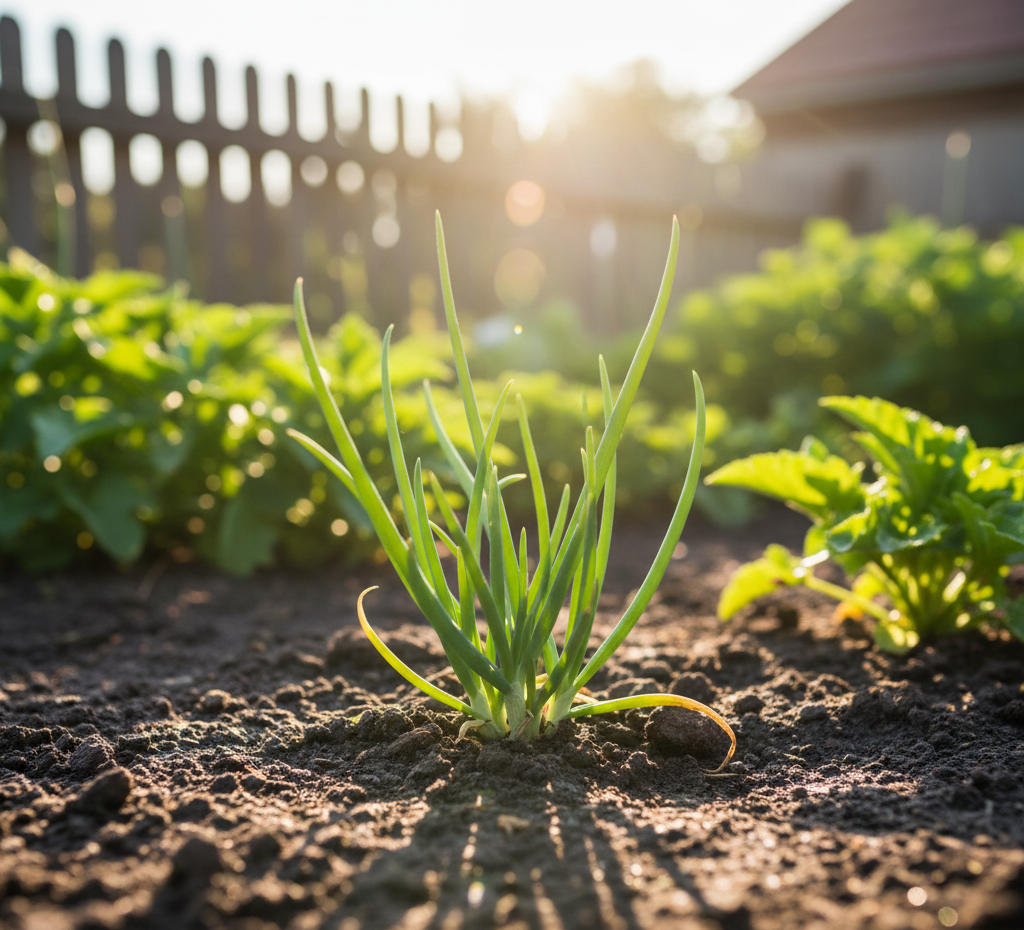
- Ideal: 6–8 hours of direct sunlight daily
- Low sun: weak leaves and smaller bulbs
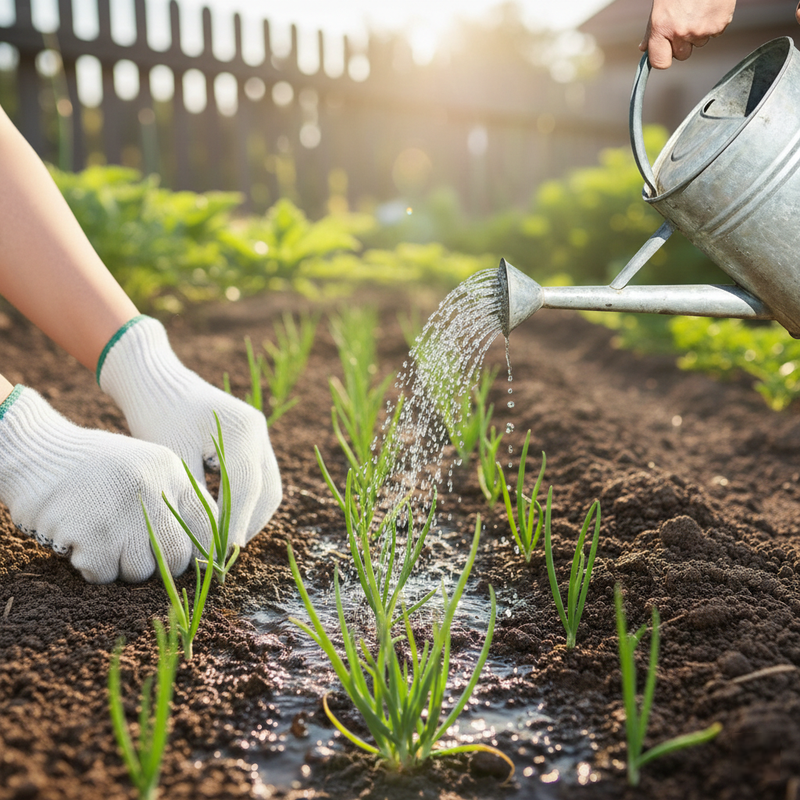
Watering Schedule
Consistent moisture improves bulb size, but overwatering can cause rot.
Best Routine
- Water when top soil feels dry.
- Keep soil evenly moist, not soggy.
- Reduce watering near harvest for better curing and storage.
Overwatering Signs
- Yellow leaves
- Soft bulbs / bulb rot
- Fungal issues
Fertilization Plan
Balanced feeding helps onions build strong leaves early and bigger bulbs later.
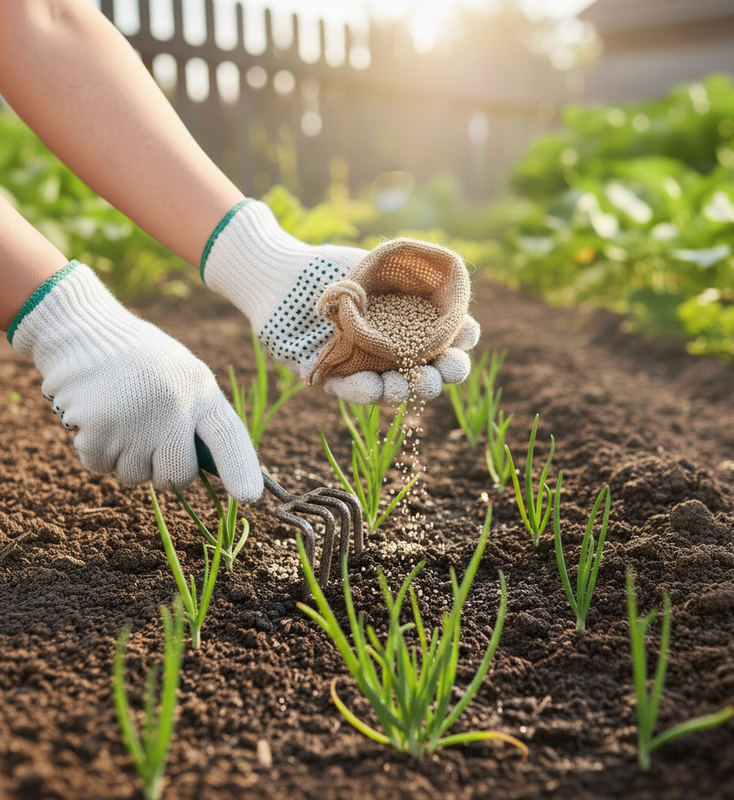
- At planting: compost/vermicompost mixed in soil.
- Early growth: light nitrogen support for leaf growth.
- Bulb stage: shift to phosphorus & potassium support.
Pruning & Care
Onions need minimal pruning. Healthy green leaves feed the bulb and improve final size.
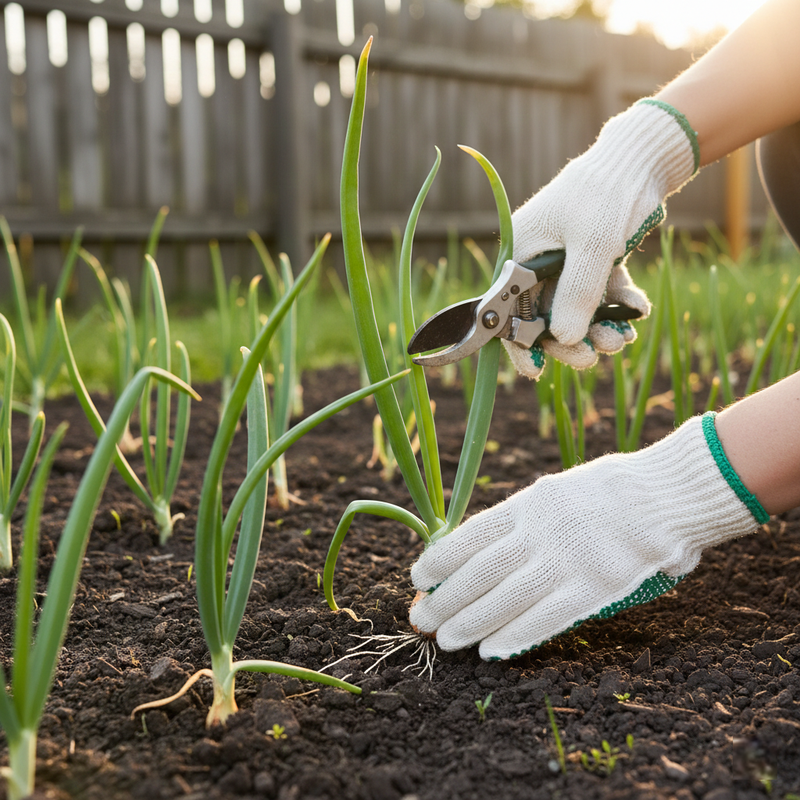
- Remove yellow or dried leaves only.
- Do not cut green leaves early—they feed bulb growth.
- Keep weeds controlled to reduce competition.
- Avoid injuring bulbs while weeding.
Pest & Disease Control
Good airflow and early monitoring prevent common onion pests and fungal diseases.
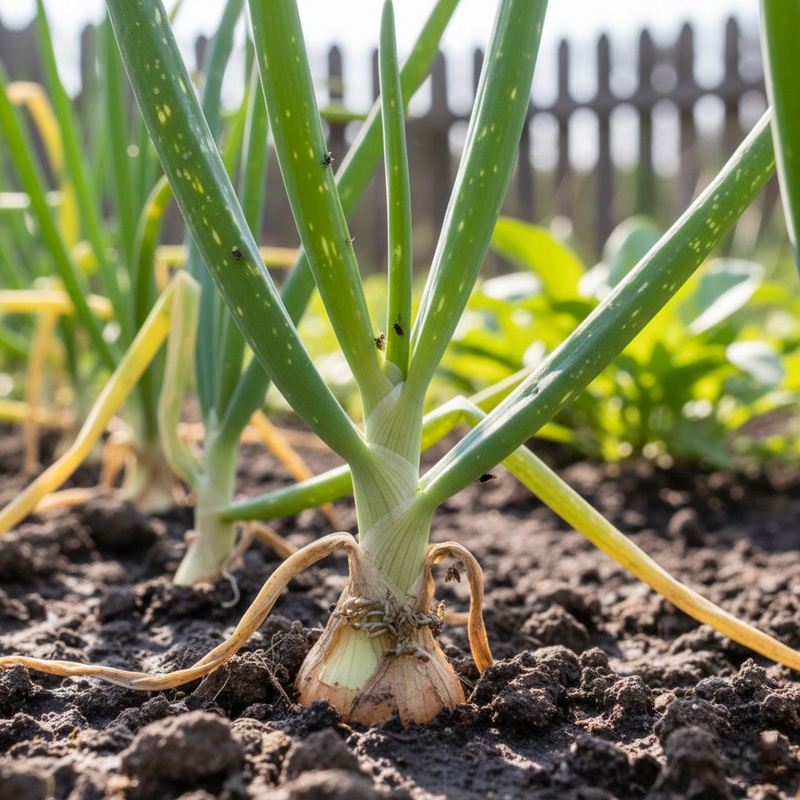
Common Pests
- Thrips
- Aphids
- Onion maggots (in some regions)
Common Diseases
- Downy mildew
- Purple blotch
- Bulb rot
Organic Prevention
- Neem oil: every 7–10 days for pests.
- Maintain spacing and airflow.
- Avoid overhead watering to reduce fungus risk.
Bulb Formation
Bulb development depends on variety, day length, and healthy leaf growth.
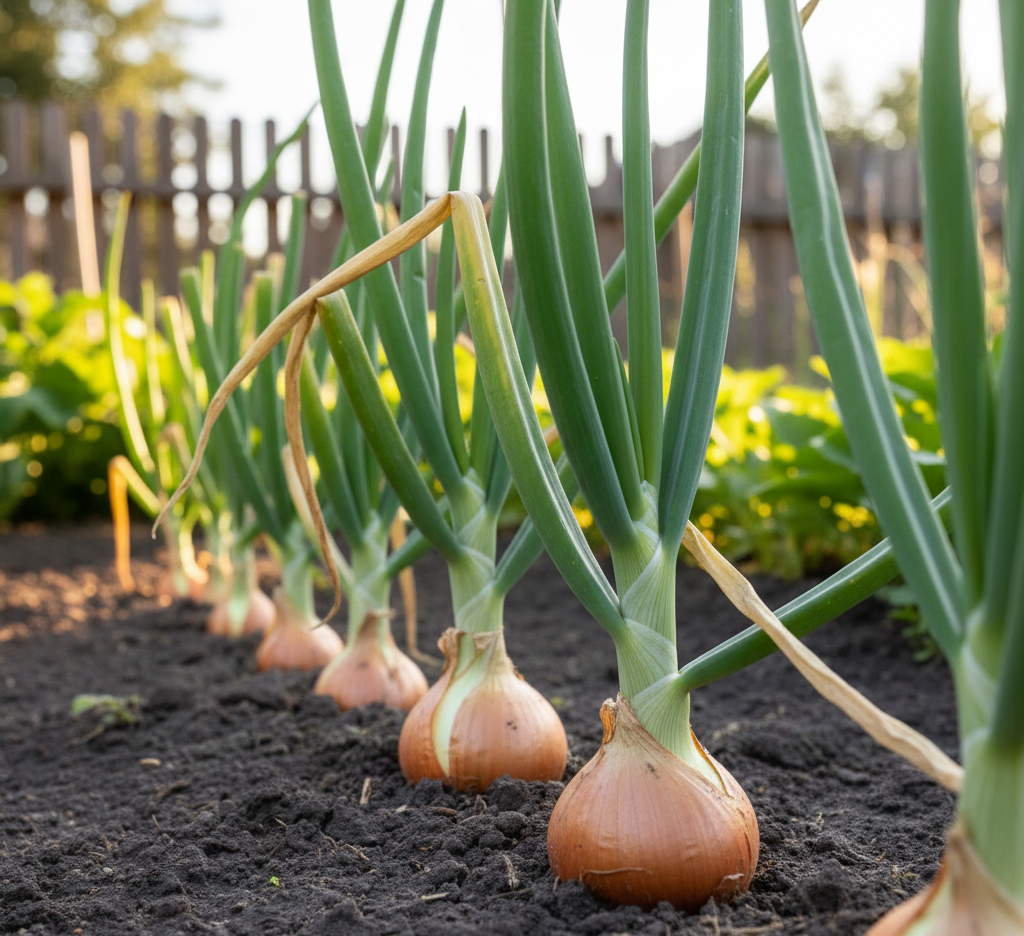
- Bulbs form underground when temperature and day length are suitable.
- Healthy green leaves help build bigger bulbs.
- Balanced feeding and steady watering support uniform bulb size.
Harvesting Onion
Harvest at the right time, then cure properly for the best taste and long storage.
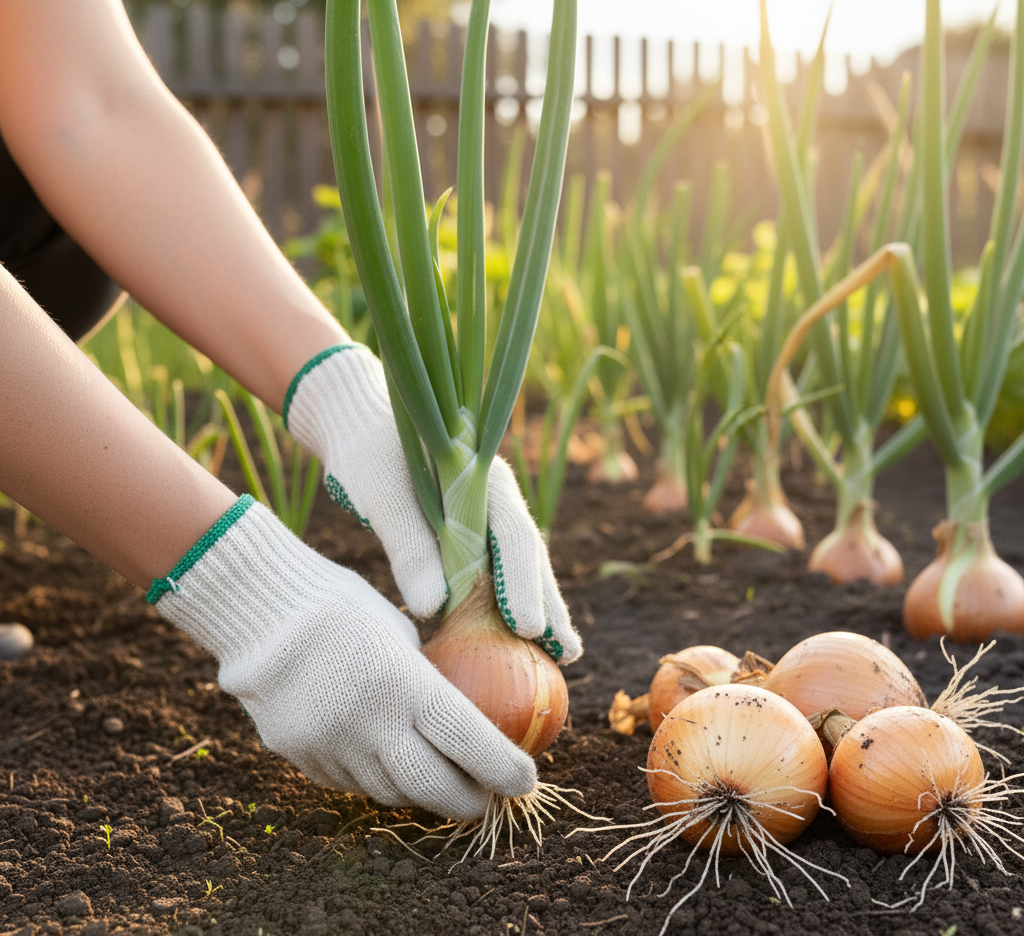
When to Harvest
- Tops turn yellow and fall over naturally.
- Bulbs feel firm and full-sized.
How to Harvest & Cure
- Loosen soil and pull bulbs gently.
- Dry in shade for 7–10 days until skins are papery.
- Trim roots and tops after curing, then store in a cool, dry place.
Onion Growing FAQ
Can I grow onions in pots?
Yes. Use a wide container with drainage and loose soil. Provide full sun and proper spacing for good bulb size.
Why are my onions small?
Small onions are usually caused by overcrowding, low sunlight, compact soil, or too much nitrogen during bulb stage. Thin plants and keep feeding balanced.
How do I store onions after harvest?
Cure onions in shade for 7–10 days until skins dry. Store in a cool, dry, ventilated place. Properly cured onions can last 2–6 months depending on variety.