
Bottle Gourd (Lau) Grow Guide (From Seed to Harvest)
Grow healthy bottle gourd (lau) vines with higher yield using this step-by-step guide: soil preparation, seed sowing, sunlight, watering, fertilization, trellis support, pruning, pest control, pollination, fruit development, and harvesting.
Soil Preparation
Fertile, loose soil helps bottle gourd vines grow fast and produce more flowers and fruits.
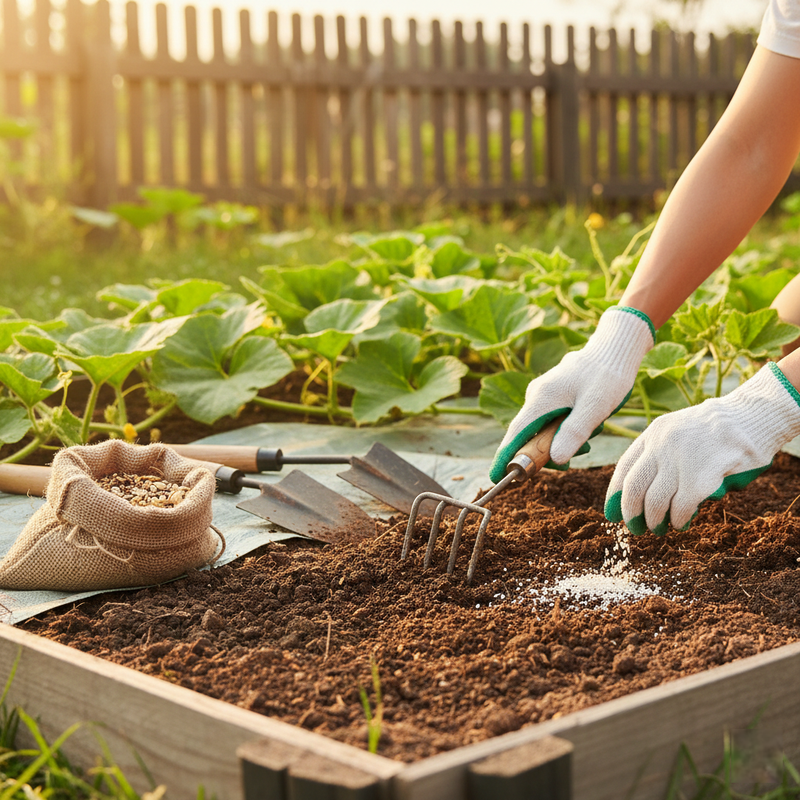
Recommended Soil Mix
- Base: garden soil + coco peat/sand for airflow
- Nutrition: compost/vermicompost for steady feeding
- Optional booster: well-rotted manure before planting
Seed Sowing Guide
Direct sowing helps bottle gourd establish strong roots and grow faster.
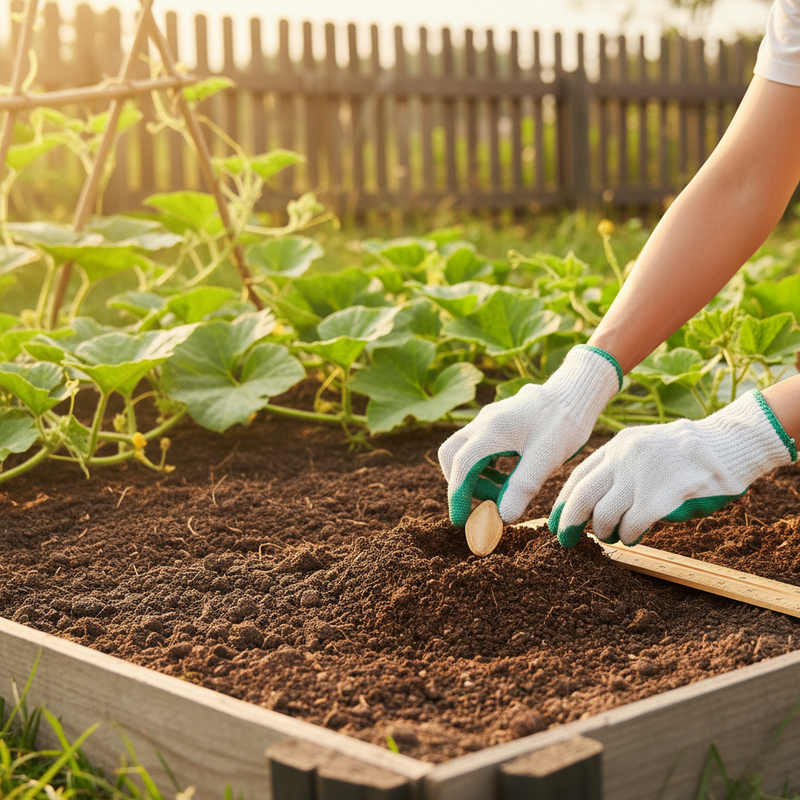
Step-by-Step
- Optional: Soak seeds 8–12 hours for faster germination.
- Sow seeds 2–3 cm deep in moist soil.
- Plant 2–3 seeds per spot; thin later to keep the strongest seedling.
- Germination usually takes 5–10 days.
Sunlight Requirements
Full sun helps bottle gourd produce more female flowers and healthier fruits.
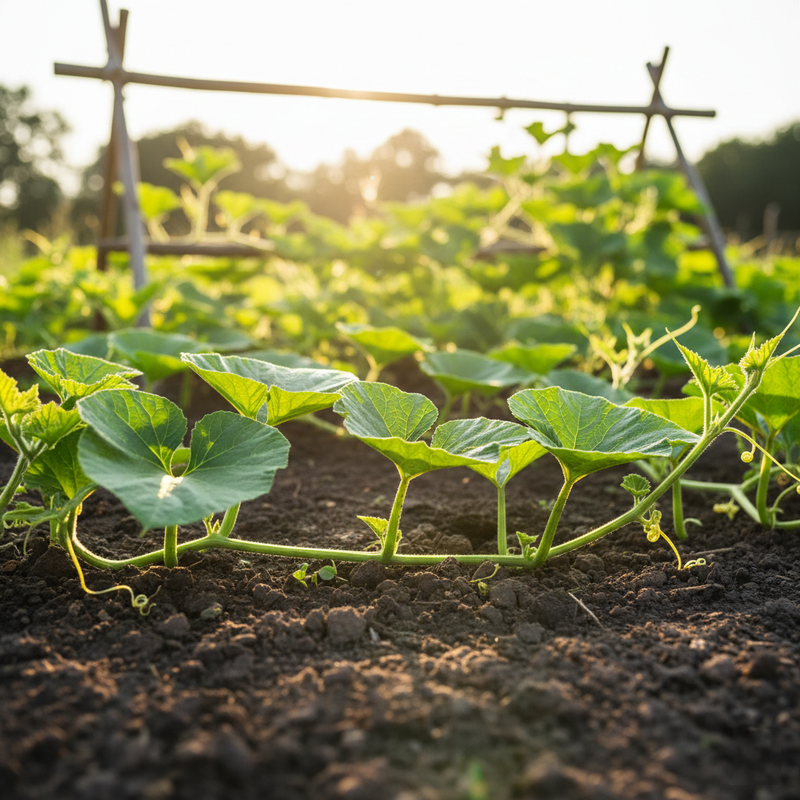
- Ideal: 6–8 hours direct sunlight daily
- Low sun: fewer flowers and slower fruit growth
- Airflow: open sunny area reduces fungal disease
Watering Schedule
Steady moisture supports flowering and fruit growth. Avoid both drought stress and waterlogging.
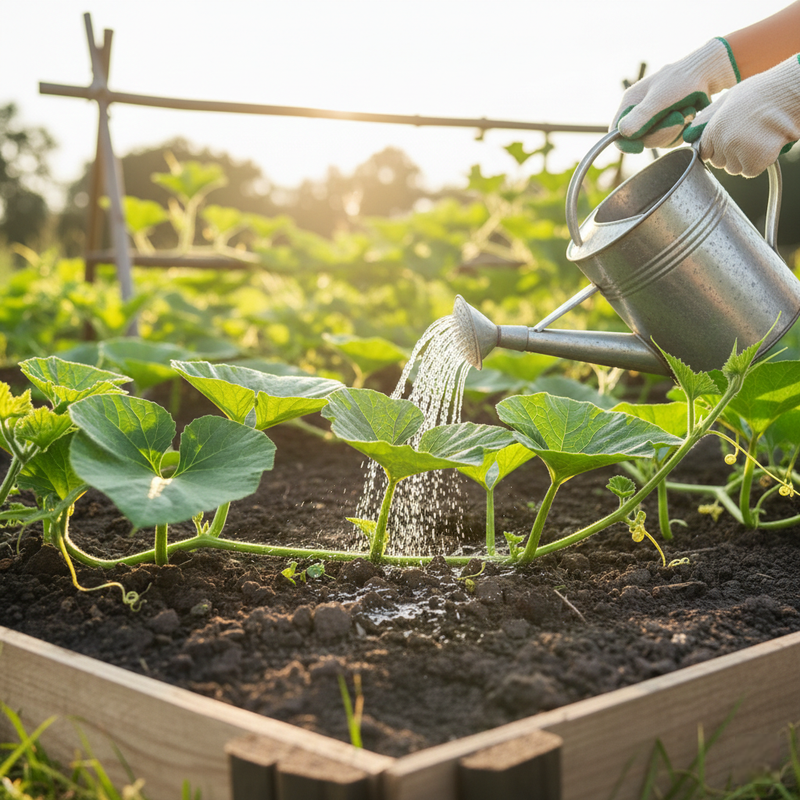
Best Routine
- Water when the top soil feels dry.
- During flowering and fruiting, keep soil evenly moist.
- In hot weather, container plants may need more frequent watering.
Overwatering Signs
- Yellowing leaves
- Soft vine near soil line
- Fungal leaf spots
Fertilization Plan
Bottle gourd is a heavy feeder—regular feeding increases flowering and improves fruit set.
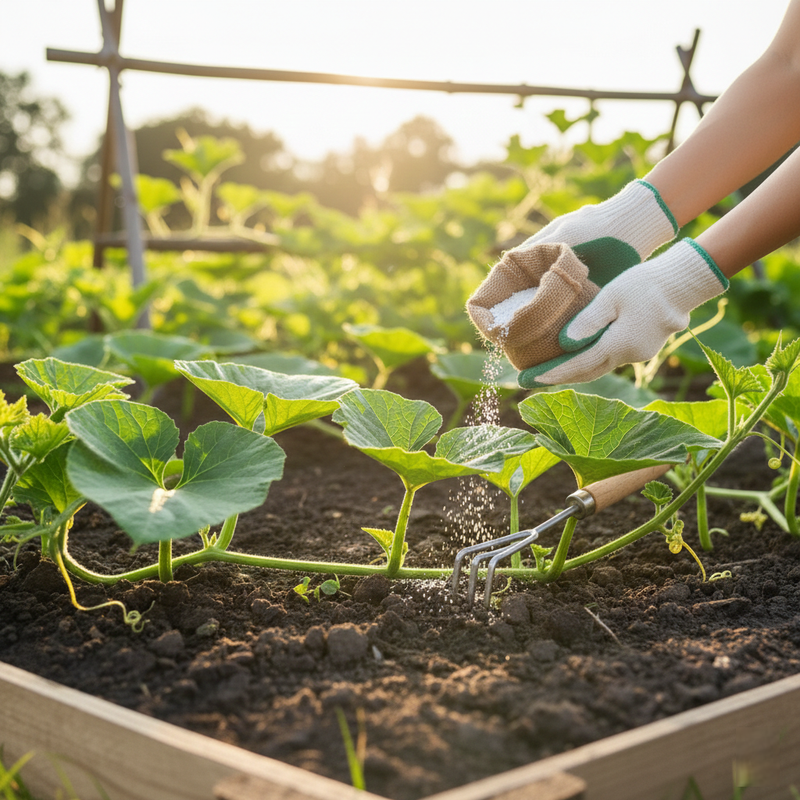
- Add compost/vermicompost every 15–20 days.
- Optional organic liquid feed every 10–15 days.
- During flowering/fruiting, add potassium support for better quality.
Trellis / Support
Trellis training improves airflow, keeps fruits clean, and increases yield—highly recommended for bottle gourd.
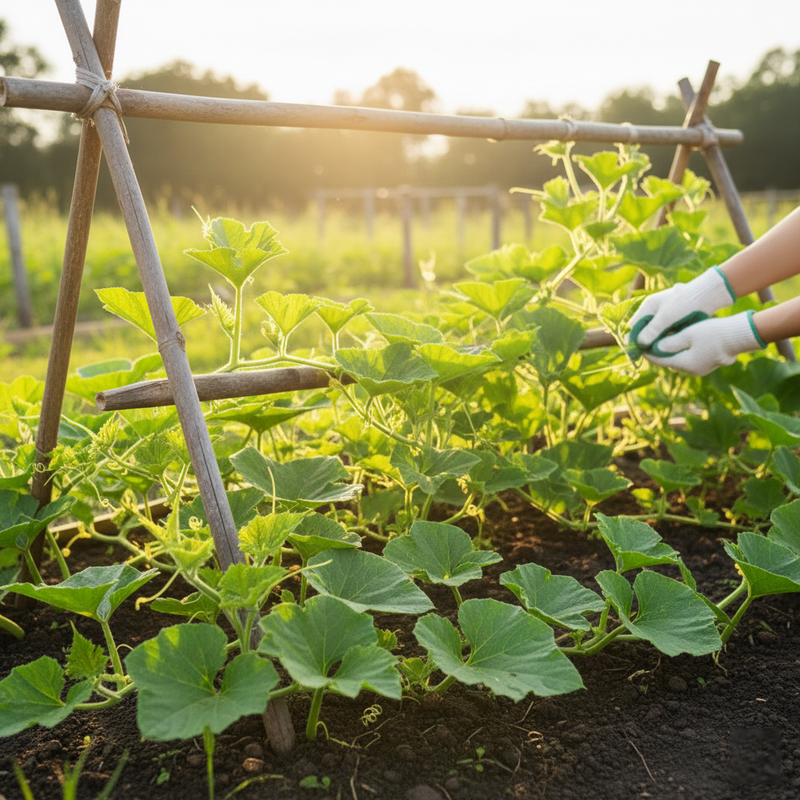
- Use bamboo trellis, net trellis, or rooftop wire support.
- Guide main vine upward early and tie gently with soft cloth.
- Hanging fruits remain cleaner and often grow straighter.
Pruning & Vine Training
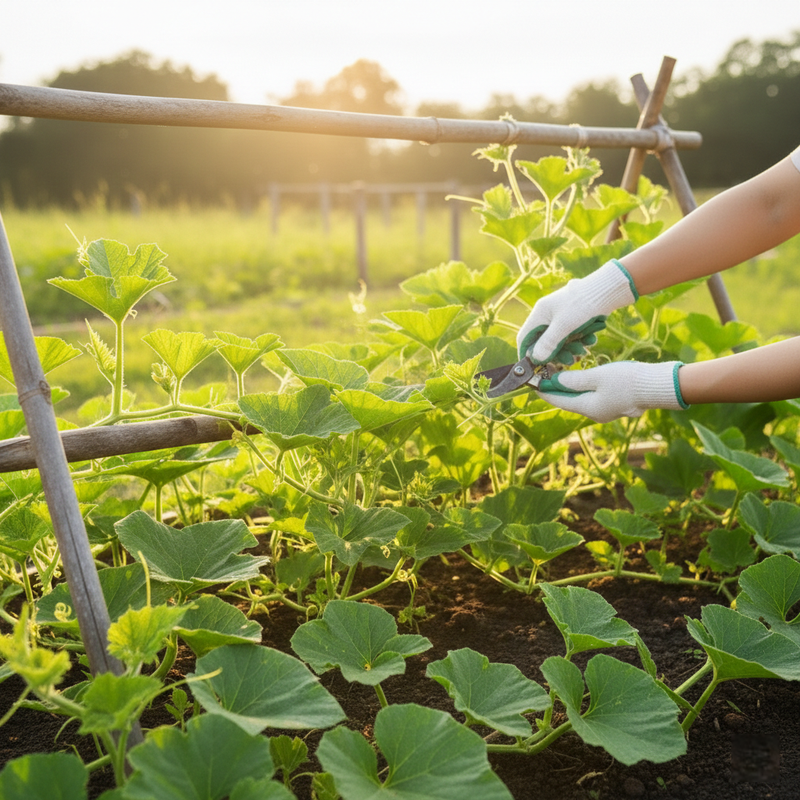
Light pruning encourages branching and improves airflow—helpful for better flowering and fewer diseases.
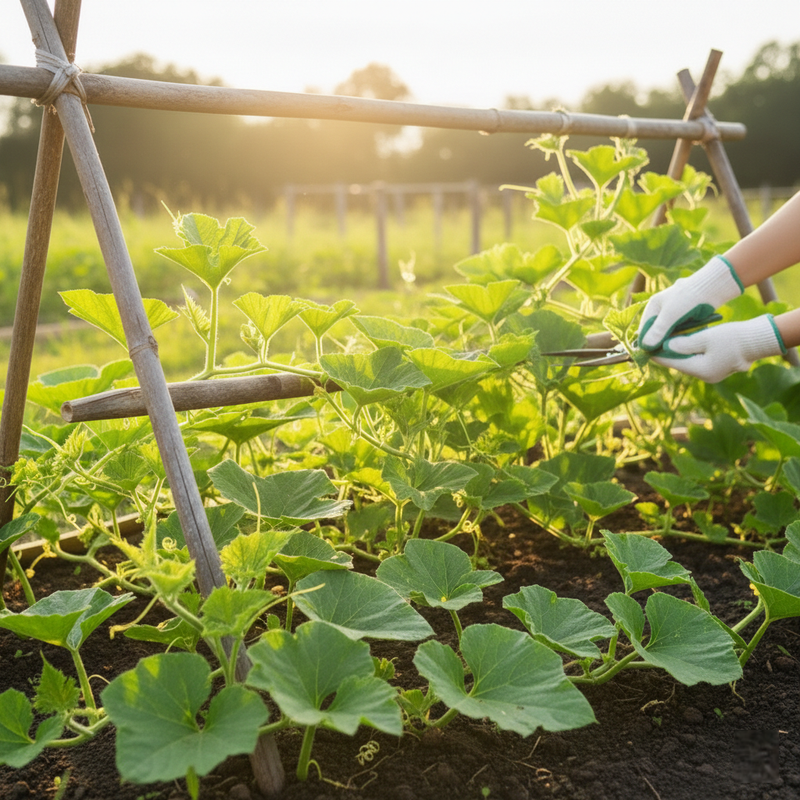
- Remove weak side shoots early to focus energy on strong growth.
- Pinch the tip once the vine reaches trellis height to encourage branching.
- Remove old/yellow leaves to reduce fungal issues and improve airflow.
Pest & Disease Control
Early monitoring and organic prevention protect leaves and fruits—especially against fruit fly and fungal diseases.
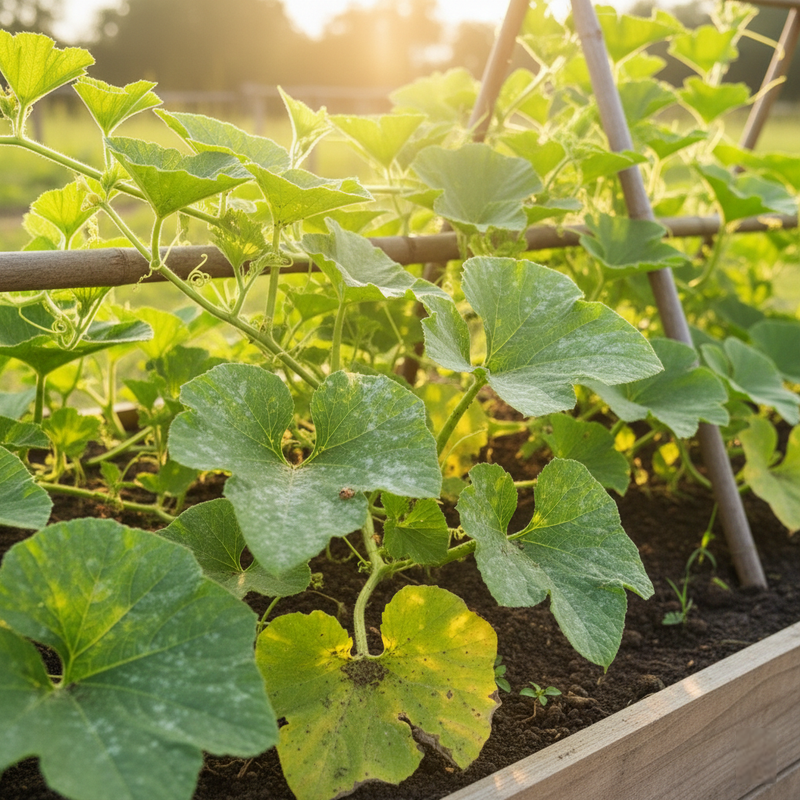
Common Pests
- Aphids
- Whiteflies
- Spider mites
- Fruit fly (major gourd pest)
Common Diseases
- Powdery mildew
- Downy mildew
- Leaf spot
Organic Prevention
- Neem oil: every 7–10 days (spray underside of leaves).
- Use traps and remove damaged fruits quickly for fruit fly control.
- Remove infected leaves early and maintain airflow with trellis.
Flowering & Pollination
Bottle gourd has separate male and female flowers. Pollination is essential for fruit set.
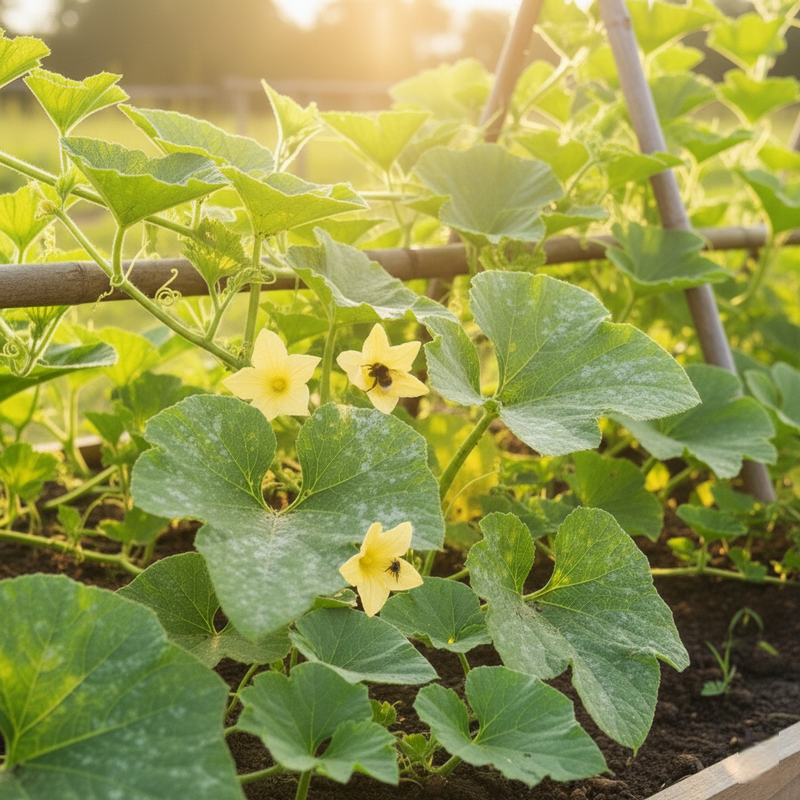
- Male flowers appear first.
- Female flowers have a tiny fruit behind the flower.
- If fruits are not setting, hand-pollinate in the morning.
Fruit Development
After successful pollination, fruits grow quickly. Consistent watering and balanced feeding keep fruits tender.
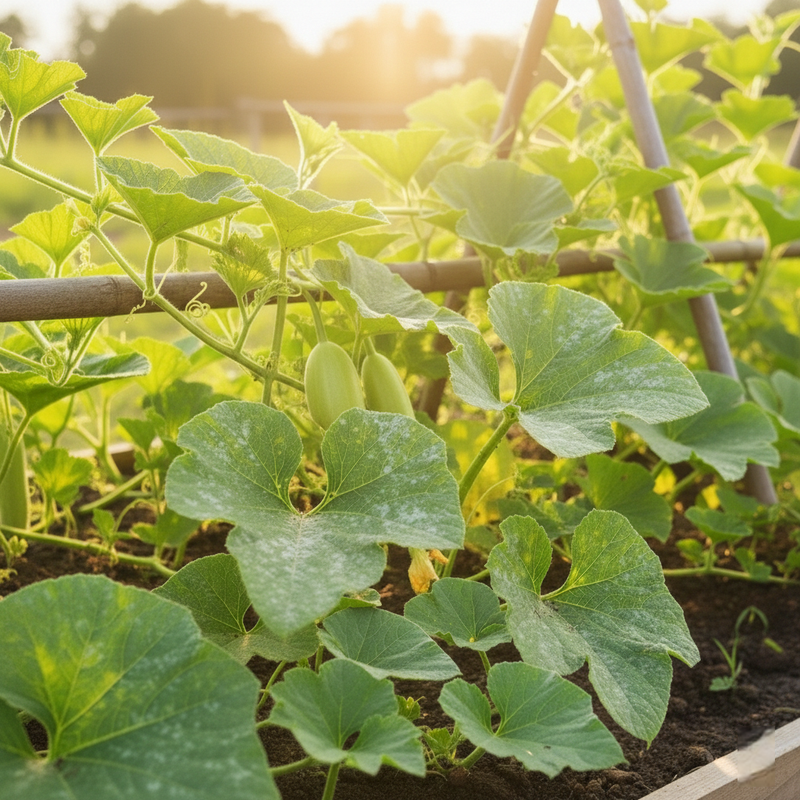
- Keep watering steady to avoid stress and bitterness.
- Potassium support improves fruit quality and shape.
- Harvest regularly to encourage continuous fruiting.
Harvesting Bottle Gourd
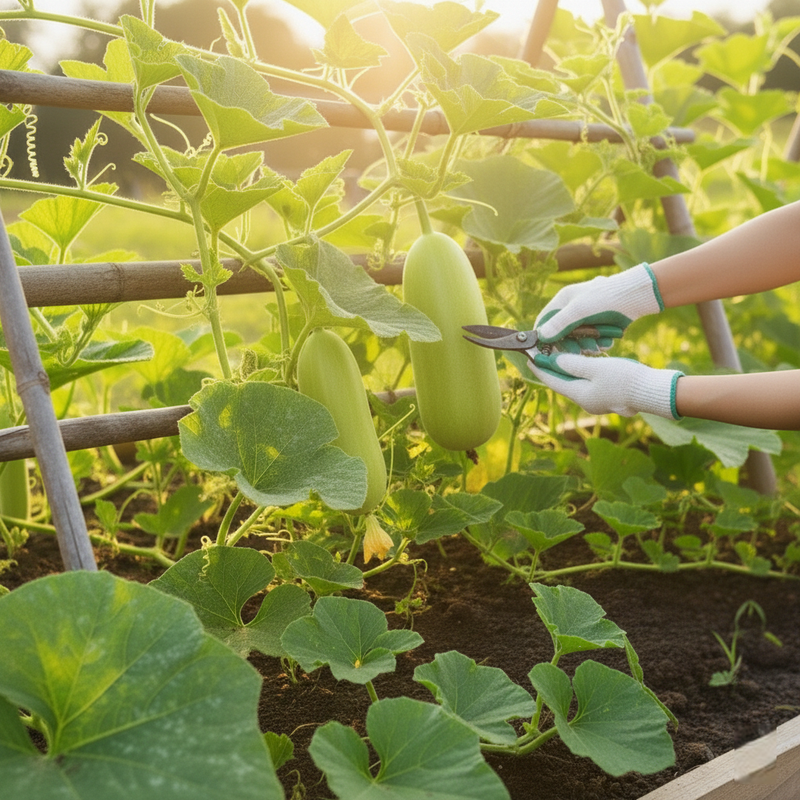
Harvest at the tender stage for best taste. Overgrown fruits become hard and seedy.
When to Harvest
- Harvest fruits when young, tender, and glossy.
- Hard skin and large seeds indicate over-maturity.
- Frequent harvesting increases total yield.
How to Harvest
- Use scissors/knife and cut with a small stem attached.
- Handle gently to avoid bruising.
Garden Visual
A quick visual reference to help you plan vine growth space and trellis setup.
Bottle Gourd Growing FAQ
Can I grow bottle gourd in a pot?
Yes. Use a large 18–24 inch pot or grow bag, compost-rich soil, full sun, and a strong trellis for the vine.
Why are flowers falling but no fruits?
This is usually due to poor pollination, low sunlight, or stress. Hand-pollinate in the morning and ensure 6–8 hours of sun.
Why are fruits bitter sometimes?
Bitterness may happen due to stress (irregular watering, extreme heat) or variety. Keep watering consistent and reduce plant stress.